 Image 1 of 4
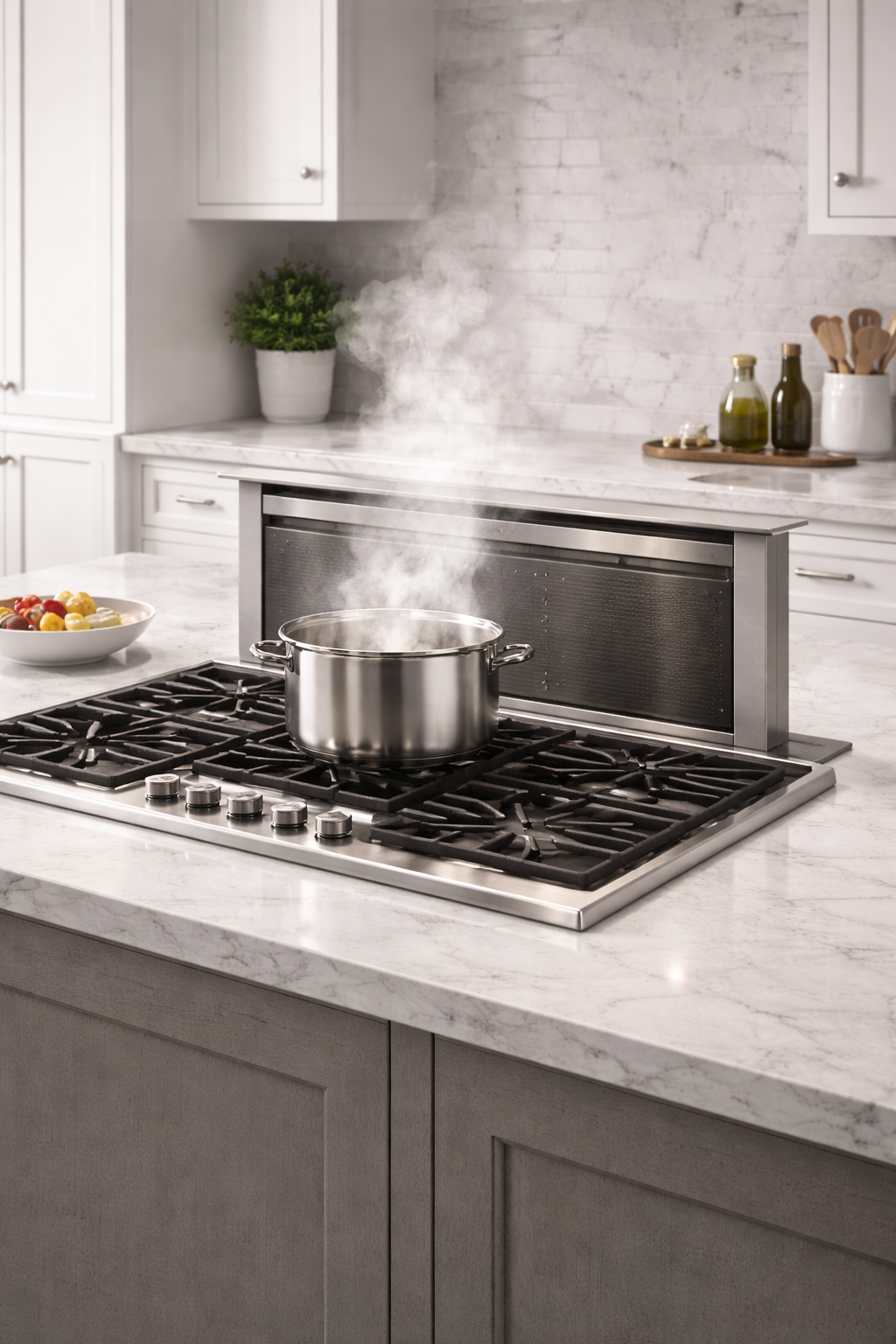 Image 2 of 4
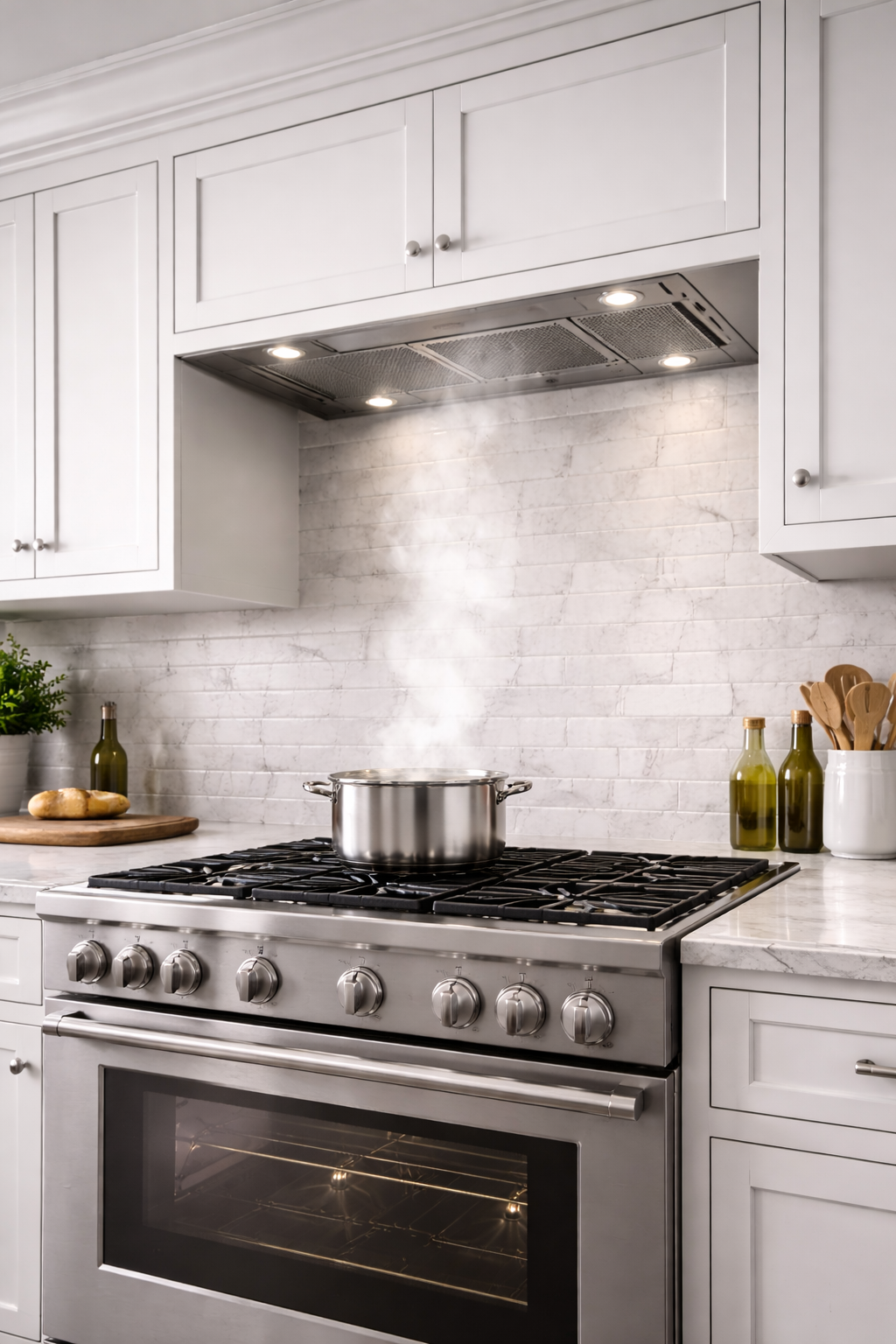 Image 3 of 4
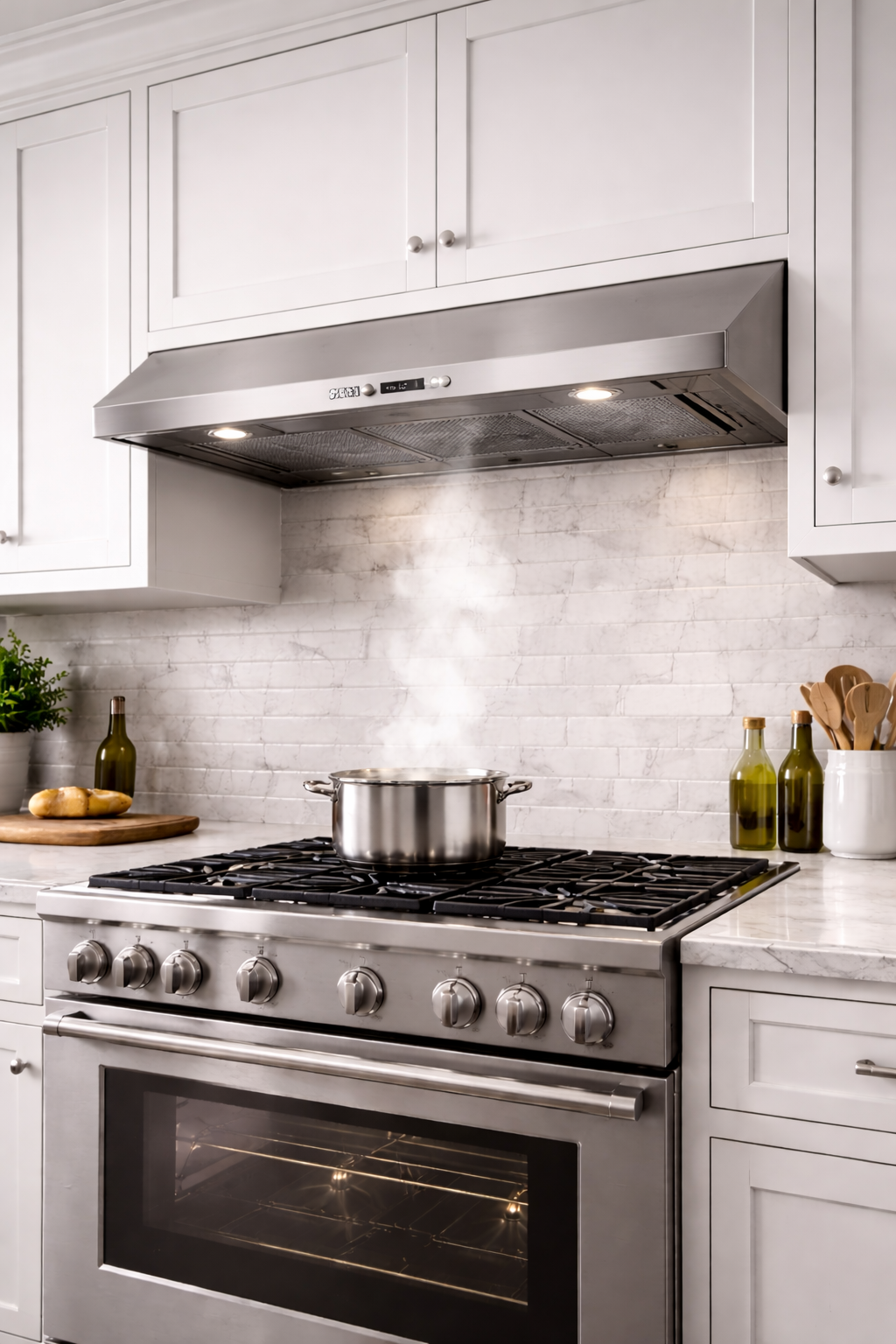 Image 4 of 4
This summary covers ventilation systems designed for residential and light-commercial kitchens, including hoods, downdrafts, island hoods, chimney hoods, and hood inserts. These systems control smoke, odors, grease, heat, and moisture to improve indoor air quality, protect finishes, and maintain occupant comfort.
Key components and types
Hoods: Overhead units mounted above cooktops; capture rising cooking effluent and channel it to a duct or recirculating filter system. Available in a range of sizes, performance ratings, and styles.
Downdrafts: Low-profile ventilators installed behind or beside the cooktop that pull smoke and fumes downward into a duct or filtration chamber; ideal where overhead installation is impractical or for sleek, minimalist designs.
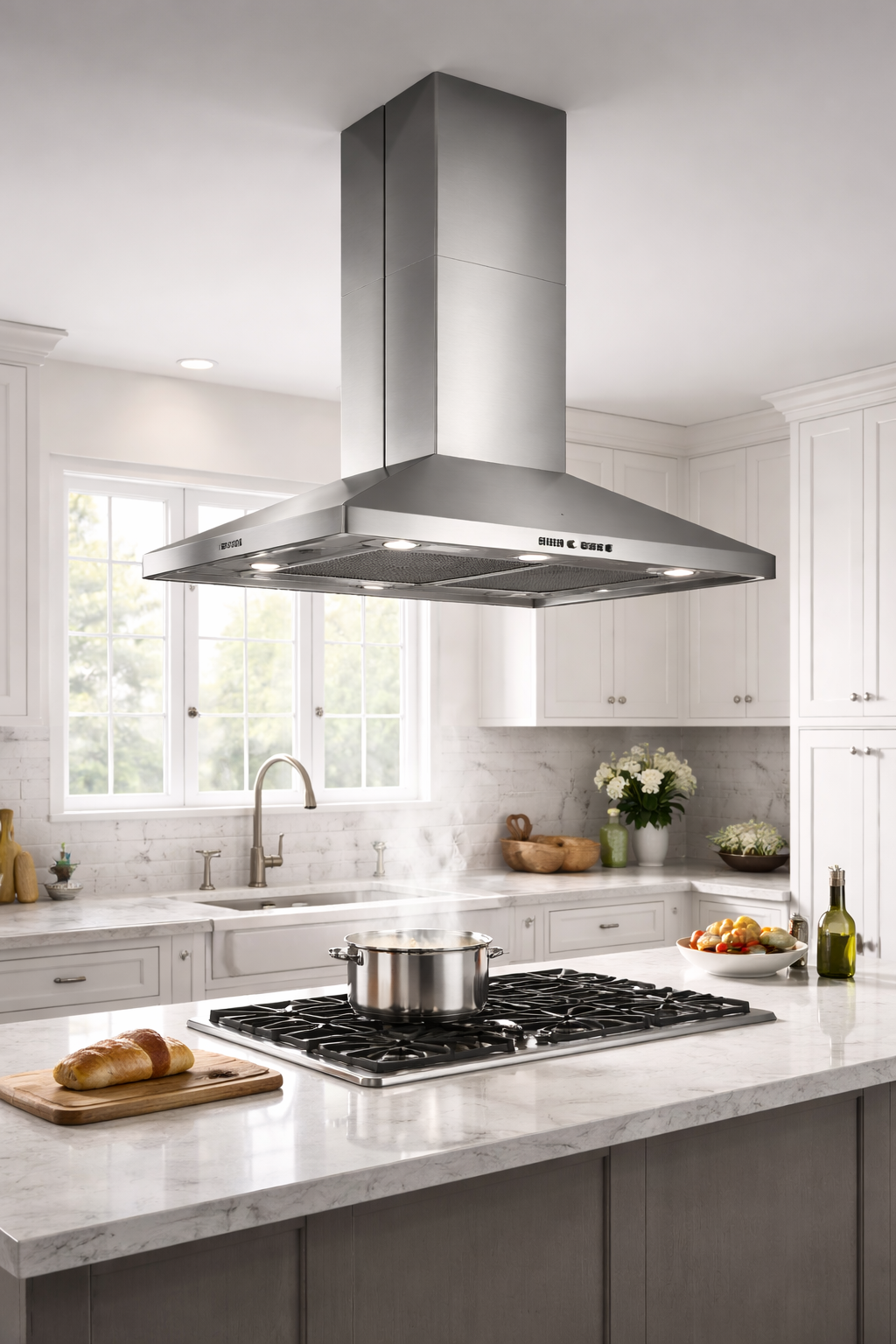
Island hoods: Ceiling-mounted units sized and rated for cooktops located on kitchen islands; engineered for higher capture efficiency and airflow to accommodate open surroundings.
Chimney hoods: Vertical, wall-mounted hoods with a visible flue or chimney cover; combine strong ventilation performance with a classic architectural look.
Hood inserts (insert/liner): Engineered blower and filter modules installed inside custom enclosures or decorative surrounds, allowing for seamless, bespoke hood designs while delivering certified ventilation performance.
Performance considerations
Capture and containment: Proper hood size, placement height, and capture area are essential for effective removal of fumes and grease.
Airflow (CFM): Matching CFM to cooktop type and cooking intensity prevents smoke backflow and ensures adequate ventilation; higher-output cooking (wok, charbroiling) requires greater airflow.
Noise (sone/dB): Balance required airflow with acceptable sound levels; remote blowers or well-engineered internal blowers reduce perceived noise.
Exhaust vs. recirculation: Ducted exhaust expels contaminants outdoors and is the preferred method for optimal air quality. Recirculating systems use grease and charcoal filters and are suitable where ducting is impractical but offer reduced contaminant removal.
Filtration and maintenance: Grease filters (mesh or baffle) protect the blower and ductwork; activated carbon filters address odors in recirculating setups. Regular cleaning and filter replacement are necessary for sustained performance.
Make-up air and ventilation codes: High-capacity exhausts may require conditioned make-up air to prevent negative pressure and comply with local codes and energy considerations.
Design and installation best practices
Size hoods to cover the full cooktop width and position at manufacturer-recommended heights for optimal capture.
Use straight, smooth, short duct runs with minimal transitions; prefer rigid metal ducting and proper sealing to preserve airflow.
Specify blower power and airflow rating appropriate to cooking usage; consider remote blowers for open-plan or quiet environments.
Coordinate hood finish and form (island, chimney, insert) with cabinetry and hood surround for integrated aesthetics without compromising performance.
Ensure access for filter removal, cleaning, and blower maintenance; factor service access into custom hood installations.
Applications and benefits
Improved indoor air quality through effective removal of grease, smoke, excess heat, and odors.
Protection of cabinetry, finishes, and HVAC systems from grease accumulation and moisture.
Enhanced occupant comfort and safety by reducing airborne irritants and combustion byproducts.
Flexibility in kitchen design—downdrafts and inserts enable varied layouts while island and chimney hoods combine form with high performance.
Summary Selecting the right ventilation system—hood, downdraft, island hood, chimney hood, or hood insert—requires balancing capture efficiency, airflow, noise, ducting feasibility, and aesthetic goals. Proper sizing, quality installation, and regular maintenance ensure long-term performance, compliance with codes, and healthier, more comfortable kitchen environments.
This summary covers ventilation systems designed for residential and light-commercial kitchens, including hoods, downdrafts, island hoods, chimney hoods, and hood inserts. These systems control smoke, odors, grease, heat, and moisture to improve indoor air quality, protect finishes, and maintain occupant comfort.
Key components and types
Hoods: Overhead units mounted above cooktops; capture rising cooking effluent and channel it to a duct or recirculating filter system. Available in a range of sizes, performance ratings, and styles.
Downdrafts: Low-profile ventilators installed behind or beside the cooktop that pull smoke and fumes downward into a duct or filtration chamber; ideal where overhead installation is impractical or for sleek, minimalist designs.
Island hoods: Ceiling-mounted units sized and rated for cooktops located on kitchen islands; engineered for higher capture efficiency and airflow to accommodate open surroundings.
Chimney hoods: Vertical, wall-mounted hoods with a visible flue or chimney cover; combine strong ventilation performance with a classic architectural look.
Hood inserts (insert/liner): Engineered blower and filter modules installed inside custom enclosures or decorative surrounds, allowing for seamless, bespoke hood designs while delivering certified ventilation performance.
Performance considerations
Capture and containment: Proper hood size, placement height, and capture area are essential for effective removal of fumes and grease.
Airflow (CFM): Matching CFM to cooktop type and cooking intensity prevents smoke backflow and ensures adequate ventilation; higher-output cooking (wok, charbroiling) requires greater airflow.
Noise (sone/dB): Balance required airflow with acceptable sound levels; remote blowers or well-engineered internal blowers reduce perceived noise.
Exhaust vs. recirculation: Ducted exhaust expels contaminants outdoors and is the preferred method for optimal air quality. Recirculating systems use grease and charcoal filters and are suitable where ducting is impractical but offer reduced contaminant removal.
Filtration and maintenance: Grease filters (mesh or baffle) protect the blower and ductwork; activated carbon filters address odors in recirculating setups. Regular cleaning and filter replacement are necessary for sustained performance.
Make-up air and ventilation codes: High-capacity exhausts may require conditioned make-up air to prevent negative pressure and comply with local codes and energy considerations.
Design and installation best practices
Size hoods to cover the full cooktop width and position at manufacturer-recommended heights for optimal capture.
Use straight, smooth, short duct runs with minimal transitions; prefer rigid metal ducting and proper sealing to preserve airflow.
Specify blower power and airflow rating appropriate to cooking usage; consider remote blowers for open-plan or quiet environments.
Coordinate hood finish and form (island, chimney, insert) with cabinetry and hood surround for integrated aesthetics without compromising performance.
Ensure access for filter removal, cleaning, and blower maintenance; factor service access into custom hood installations.
Applications and benefits
Improved indoor air quality through effective removal of grease, smoke, excess heat, and odors.
Protection of cabinetry, finishes, and HVAC systems from grease accumulation and moisture.
Enhanced occupant comfort and safety by reducing airborne irritants and combustion byproducts.
Flexibility in kitchen design—downdrafts and inserts enable varied layouts while island and chimney hoods combine form with high performance.
Summary Selecting the right ventilation system—hood, downdraft, island hood, chimney hood, or hood insert—requires balancing capture efficiency, airflow, noise, ducting feasibility, and aesthetic goals. Proper sizing, quality installation, and regular maintenance ensure long-term performance, compliance with codes, and healthier, more comfortable kitchen environments.